Sapper Harry Wheeler
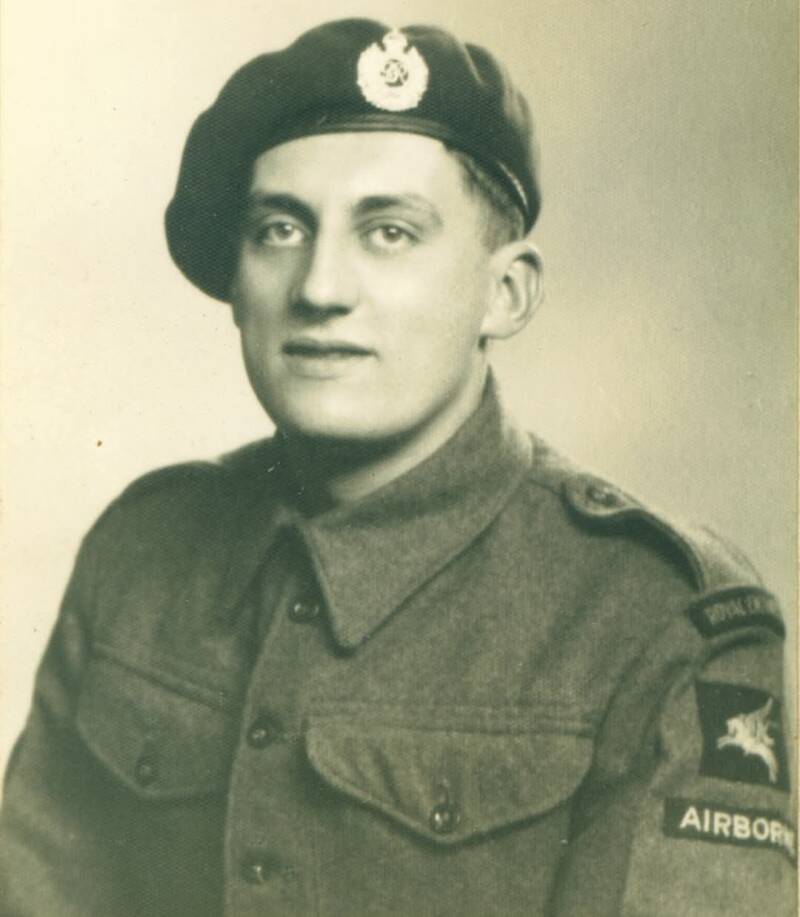
Mr Wheeler was a sapper in 249 Field Squadron of the Royal Engineers who was called up when he was 17. He said: “I had only been in the army for six weeks when the lieutenant colonel asked for 60 volunteers for a special assignment. Nobody stepped forward. He then called us all the most wicked names under the sun.
He got a list of all our names and started calling them out in alphabetical order. “Then we went training. We would be walking and running for miles with 60lb packs on our backs. We didn’t know why. At the time, I was teaching the Ox and Bucks how to use Bangalore torpedoes and high explosives.
“Major Howard came up to me and asked whether I knew what I was doing. I said if I didn’t know what I was doing I wouldn’t know much about it, so I think he took me because of my cheek. It was my first big mission — they never told us anything about it.”
Shortly after midnight on June 6, his glider skidded to a halt on French soil and he became one of the first men to start the liberation of Europe.
Mr Wheeler said: “The glider crashed down with a hell of a smash but we had the element of surprise — that was the thing that saved us. We were outnumbered and landed 45 yards from the bridge. If we were seen we would have had no chance. As soon as we hit the bridge, all hell broke loose and a machine gun opened up on us. I was right behind Lieutenant Den Brotheridge, the first man who was killed.
“Half the Germans were asleep and a lot of them were in brothels. Even the major in charge of them was in a coffee house. “They bombed, mortared and set snipers on us. They dropped a 500lb bomb down the side of the bridge that never blew up, thank God. If it had, there is no way we would be here now.”
D-company needed explosive experts because British intelligence learnt the bridge was primed with explosives so the Germans could blow it up if the Allies invaded. Mr Wheeler had to disarm it. He said: “My job was to stop us from getting blown up. Luckily, we didn’t find any bombs — there was just detonators and wiring. The French underground had taken them off. We didn’t know if they did it to help us — we will never know — but I am glad they did. When the Germans found out, they were all massacred.
“I had wire cutters that were insulated up to 70,000 volts. I remember cutting one wire that literally blew me off my feet. I cut anything that I could find.
“We held the bridge for 12 hours before Lord Lovett with 4 Commando came through. It took us 45 minutes to take the bridge, maybe quicker. We took 30 prisoners.” After taking the bridge,
Mr Wheeler was sent back to England for a day before returning because the Germans were trying to break through. He said it was then “easier” because they had the RAF protecting them. He said: “We were on that bridge for seven weeks and lost 1,000 men. If we hadn’t held it, then there would not have been D-Day. If the German armour had got through, then D-Day would have been a whitewash, a massacre.
“The café owner thought we were German officers and started shouting at us. When he realised who we were, he opened up a magnum of champagne in celebration. I was a nervous wreck afterwards — wouldn’t you be if you saw your mates being blown to bits?” Before joining the British Army, Mr Wheeler worked for William Lee Butchers in Nettlebed Oxfordshire . After the war, he worked on the Peter Fleming Estate, where he met Mavis, She was a milk maid in the Women’s Land Army.
They were married in August 1949 and had five children, eight grandchildren and five great grandchildren. They lived in Henley near Nettlebed for over 30 years.
Mr Wheeler also worked as a prison officer at Huntercombe Youth Offender Institute for 18 years and Baxters Butchers in Henley for another 18 years. Despite his vital role on D-Day, he said: “I was not a hero — we were all scared stiff. All I was thinking about was whether I would see my mother again and whether I was going to come back.
“The people lying in the field, they are the heroes. I’ve never seen myself as a hero or called myself one. I simply got away with it.”
I remember him telling me he would have taken the bullet if Den hadn't been there.
His job was to cut the fuses to the explosives that the Germans had placed on the bridge. But I don't think the charges were set,because of the speed of the attack?
His daughter told me he still had the cutters he used but they have been donated to the Ox & Bucks museum at Woodstock
Harry Wheeler was at the Pegasus Memorial near Juno Beach at the 75th anniversary with his sons, Derek and Sean.
Harry was in Glider #1 that landed just a few feet from Pegasus Bridge which was under German control. Two other gliders landed within 100 yards of each other. The British pilots had practiced the landing 42 times.
The Brits were charged with making sure the Germans did not blow up the bridge so their plan was to disable the explosives at the bridge.
Harry said the glider landing was hard and as an engineer, it was his job to cut the wires so the explosives would not detonate. Much to his surprise, the detonating device was there but the explosives were stored in a box away from the bridge. Harry cut the wires. “We were all scared blood stiff,” Harry said as he looked up from his wheelchair to the crowd of Americans that had assembled around him to hear his story. “I think a lot of you, Yanks.”
Sadly Harry passed away in 2011 aged 86 - he will always be remembered for what he did for his country.
Créez votre propre site internet avec Webador